

Client Spotlight: Reclaiming a Safe and Healthy Home

Marian Herbert and her Legal Aid attorney pushed for critical repairs, defended against eviction, and restored stability in the apartment she has called home for 15 years.
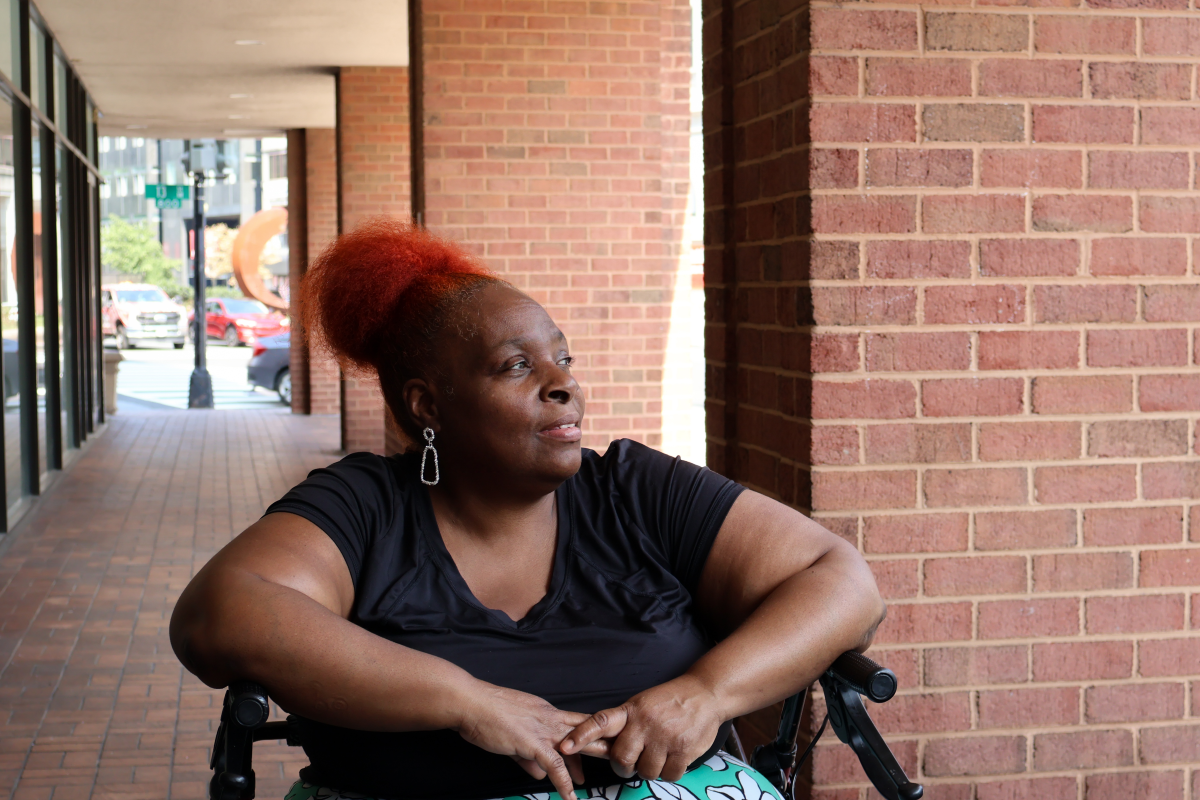 Marian Herbert has lived in the community near St. Martin’s Apartments in Northeast DC since she was 12. She fondly remembers taking taekwondo lessons, spending time with friends at the community center, and chatting with the nuns at the Catholic school across the street. Now in her 60s, Ms. Herbert still deeply values the sense of home and belonging she has found there.
“I take great pride in where I live. It’s not just an apartment; it’s a home,” said Ms. Herbert, who moved into the complex about 15 years ago.
So when the landlord filed two eviction cases against Ms. Herbert, she was left confused and worried about losing the home she cherished.
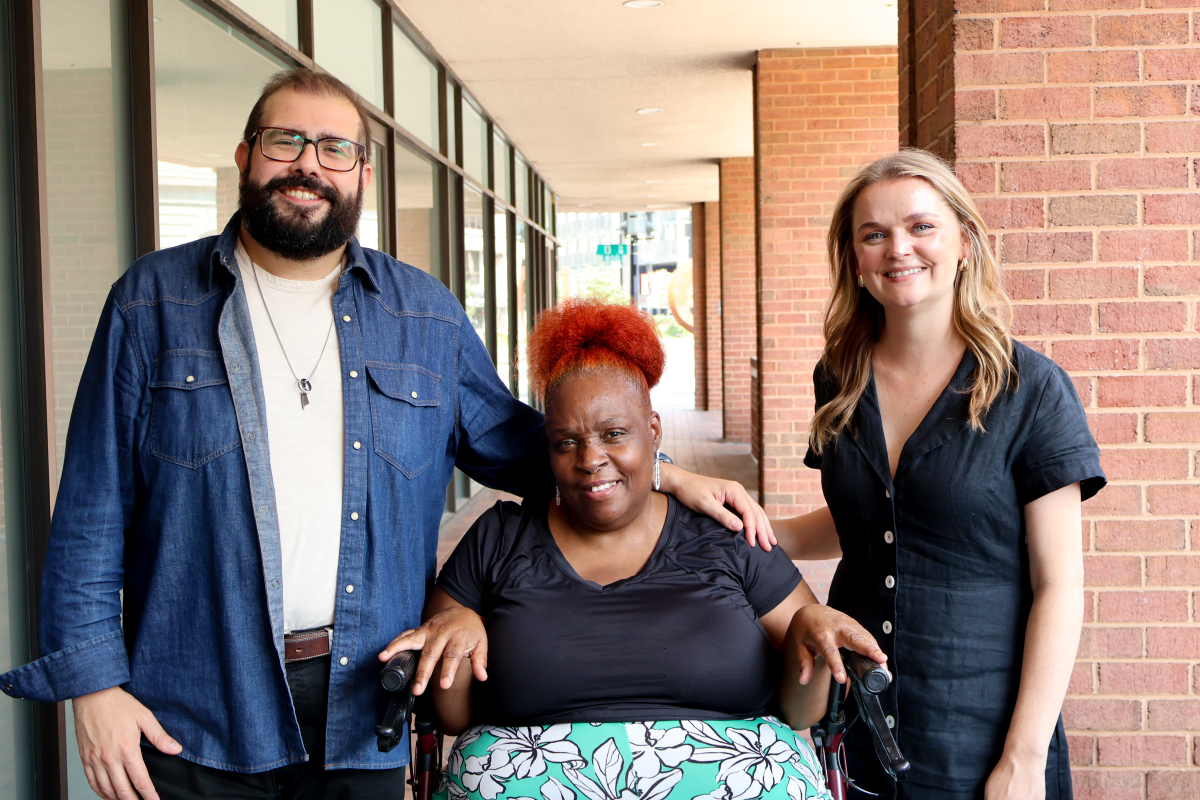
Ms. Herbert reached out to Legal Aid DC to try to make sense of the situation and connected with Staff Attorney Ashley Close. Ashley found that in the back-to-back eviction filings, Ms. Herbert’s landlord alleged she had violated her lease. Their claims included that she had an unauthorized occupant and pet. In reality, her son and his service dog had stayed with Ms. Herbert to help her while she was having health problems and struggling with day-to-day tasks due to her disability.
As Ashley began working with Ms. Herbert in late December 2024, it quickly became clear that the eviction cases were only part of what she was facing. Ms. Herbert did not have heat and hot water in the middle of winter, which was especially tough because she relied on hot baths to ease her back spasms. Ms. Herbert also reported boiler issues, flooding, moisture, roaches, and decaying carpeting.
“It was a total violation of my rights as a tenant,” Ms. Herbert said.
Ashley filed an emergency request for repairs to restore Ms. Herbert’s heat and hot water. The issues were initially resolved before the hearing, but the fight for better conditions continued.
Housing Code Violations Become Evidence
With the heat and hot water back on for the time being, Ashley and Ms. Herbert went on the offensive about the other housing code violations in her apartment and filed a case in Housing Conditions Court.
Recurring issues with the boiler caused multiple floods in Ms. Herbert’s apartment, including one that was particularly severe. The flooding and moisture worsened a roach infestation, and roaches crowded along the edges of doors and kitchen cabinets. Waterlogged old carpeting aggravated Ms. Herbert’s asthma and became a tripping hazard as it frayed.
Instead of addressing the underlying problems, the landlord blamed the conditions on Ms. Herbert’s housekeeping. The landlord “got hostile” when she asked for repairs.
“I couldn’t do it alone – I needed to protect myself, because anything I was doing wasn’t bringing a result,” she said. “The landlord was relentless and had no intention of doing the repairs.”
Ashley was “instrumental” in helping Ms. Herbert assert her rights. Ashley and Legal Aid Housing Investigator Omar Hashem visited Ms. Herbert’s home to gather evidence and take photos as they built their case.
“The evidence was always there, but just because you have evidence doesn’t mean that the judge will rule in your favor. I learned that,” Ms. Herbert said. “You just have to believe in the process.”
In March 2025, a DC Department of Buildings (DOB) inspector visited the apartment and found seven housing code violations, confirming many of Ms. Herbert’s concerns and raising others, including plumbing and drywall issues, and a broken smoke detector and fire alarm system. At a follow-up inspection in August, only one had been fixed. The judge ordered the landlord to make the repairs within 30 days.
Unsafe Conditions Escalate
While the housing conditions case went forward, new issues arose that called for more emergency filings and hearings. In June 2025, Ms. Herbert’s air conditioning stopped working, and her apartment reached 90 degrees. The problem lasted for months, and the landlord was ordered to temporarily relocate her to another unit. Around the same time, her hot water stopped working again. When the water was tested in late July, the shower was 40 degrees below the required minimum temperature.
Then in September 2025, plumbing leaks flooded part of the unit, and water began pouring out from a light fixture. Ashley requested a Healthy Homes inspection through the DC environmental health agency, and inspectors documented continuing problems with roaches, electrical sockets, flooring, cabinets, peeling or cracked paint, appliances, and water damage.
A month later, Ashley filed another emergency request when the heat and hot water went out again. By this time, the landlord had sent exterminators to the apartment to treat for roaches, but it was not fully effective, and the chemicals aggravated Ms. Herbert’s asthma so badly that she went to the hospital.
“Almost a year into the case, we were still trying to get the landlord to fix the original set of violations, and Ms. Herbert kept having to deal with new issues popping up because the general state of disrepair at the property. It was always one step forward and two steps back,” Ashley said. “It was so frustrating for Ms. Herbert, and really detrimental to her health.”
With the 30-day repair deadline long past, Ashley filed a motion for contempt and requested reassignment to an associate judge who could impose sanctions. At a hearing in December, the judge warned the landlord that they would face penalties if the repairs weren’t made.
A Legal Fight on Two Fronts
Throughout her battle for improved conditions, Ms. Herbert still had the eviction case hanging over her, forcing her to navigate overlapping cases in different courts and on different timelines. This made an already stressful process even more confusing.
“When I went to court, I felt a little helpless in some ways,” Ms. Herbert said. “I would not have been able to maneuver through those cases without assistance. I'm so happy that Ashley was there.”
As with the housing conditions case, Ms. Herbert’s landlord was slow to take any action on the eviction case. Ashley tried to resolve the eviction case outside of court, and then through mediation, but the landlord wouldn’t budge.
“It seemed from the beginning that the landlord didn’t have much of a case, but when we got to the discovery phase, it was clear that they had no evidence whatsoever to support their claims that Ms. Herbert had violated her lease,” Ashley said.
In January 2026, Ashley filed a motion for summary judgment, asking the court to rule on the case without a trial. The judge granted the motion; the eviction case was dismissed, and Ms. Herbert and Ashley continued to press forward with the housing conditions case.
Repairs Finally Take Hold
After months of pressure and with the landlord under threat of sanctions, things started to improve at Ms. Herbert’s apartment. The carpet that had aggravated Ms. Herbert’s asthma was removed in January 2026, and the landlord agreed to hire a company to provide roach treatment using safer specifications that Ashley requested.
By May 2026, after more than a year of litigation, all the needed repairs were finally done. Ashley filed to dismiss the case.
Since then, Ms. Herbert said her quality of life in the apartment has “improved greatly.” She can breathe cleaner air, cool off when it is hot, use hot water, and return to the “simple commodities” and routines that make her apartment feel like home. More importantly, she can once again welcome her family into a healthier environment.
During the worst of the mold and unhealthy conditions, Ms. Herbert avoided having her 15 grandchildren and 3 great-grandchildren visit because she did not want to risk them getting sick. Now, with the repairs complete, her home can again be a safe gathering place for the people she cherishes.
For Ms. Herbert, the outcome meant more than repairs. It meant being able to remain in the community she loves, in the home that supports her health and independence.
“I felt very grateful to have a defense when I felt defenseless,” she said.
More News from Legal Aid
In Its First Year, the DC Resource Bridge Connected Thousands of DC Residents to Free Legal Help

Legal Aid welcomes six attorneys in 2026 cohort class
The attorneys will bolster Legal Aid’s systemic, public benefits, housing, and consumer law work.

Legal Aid DC, Amara Legal Center Unite to Expand Legal Help for Sex Trafficking Survivors
Amara Legal Center’s Staff to Join Legal Aid DC’s Family Law and Domestic Violence Unit, Continue Work for DC Survivors
Latest News
In Its First Year, the DC Resource Bridge Connected Thousands of DC Residents to Free Legal Help
Developed by the DC Bar Foundation and hosted by Legal Aid DC, the program has received more than 3,850 inquiries and connected residents with free and low-cost legal assistance through a network of 30 partner organizations.
Legal Aid welcomes six attorneys in 2026 cohort class
The attorneys will bolster Legal Aid’s systemic, public benefits, housing, and consumer law work.