

DC Budget: Council Must Come Together to Reverse Cuts

An update on DC’s budget as the Council weighs investments in social safety net. Critical programs are still at risk of devastating cuts.
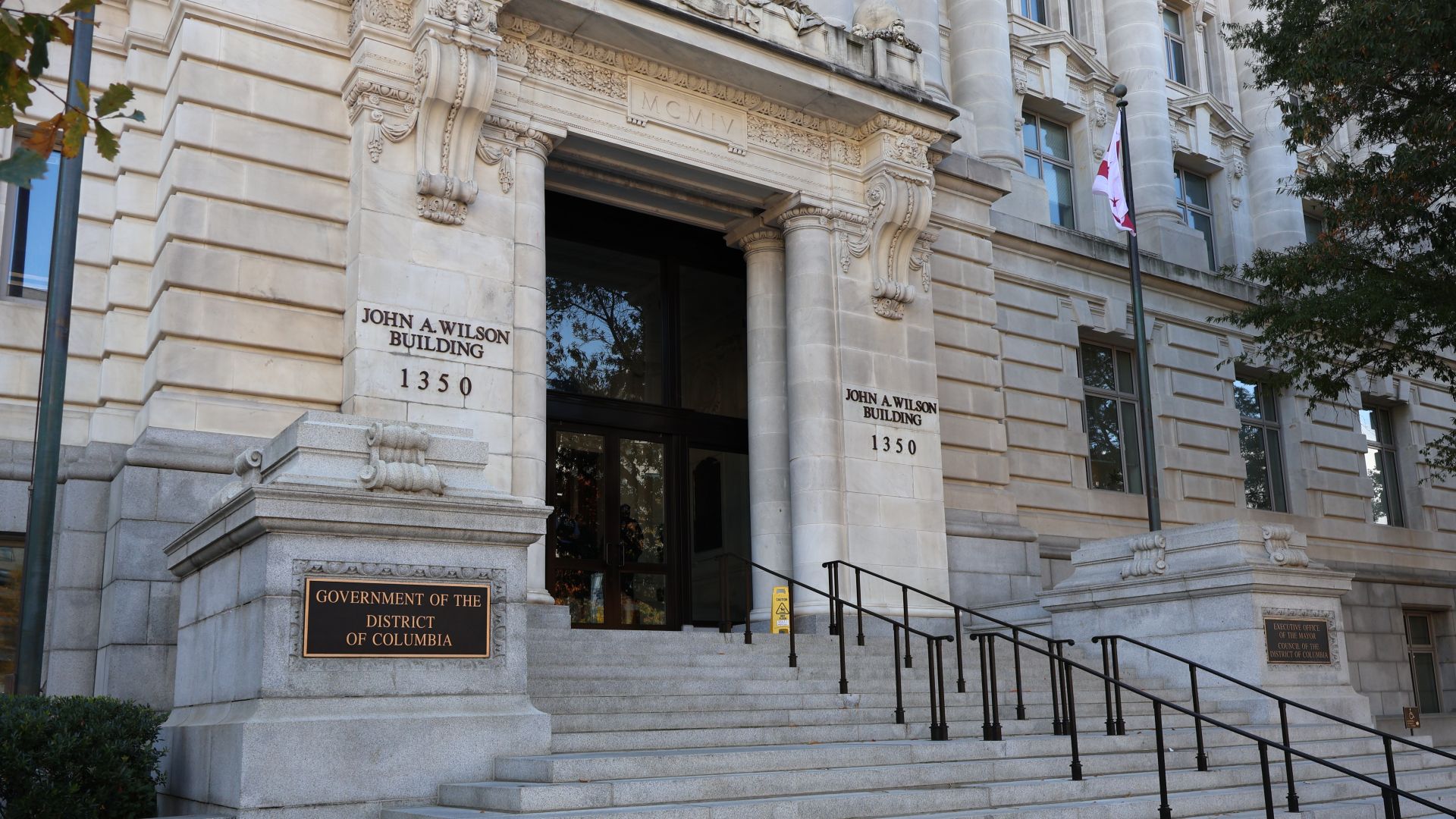
Mayor Bowser’s budget proposals cut funding across nearly every major part of DC’s safety net, including housing assistance, cash assistance, healthcare access, and legal services. The budget is now before the full Council, which must decide whether DC will adopt a budget that protects its most vulnerable residents or continue a pattern of economic austerity that deepens inequality.
Council Committees have completed their individual budget “markups,” where they reviewed agency budgets and proposed targeted restorations and improvements to funding. While several Committees made important investments, many essential protections remain underfunded or entirely absent.
Every day, Legal Aid DC works with DC residents facing eviction, loss of income, barriers to healthcare, and systemic legal challenges that become impossible to navigate without support. The decisions the Council makes in the coming weeks will directly affect whether thousands of families can remain housed, feed their children, access medical care, and secure legal assistance when they need it most.
Protecting Access to Healthcare
Healthcare programs like DC Healthcare Alliance and Healthy DC are lifelines for thousands of low-income District residents, including many immigrants and workers in low-wage jobs who would otherwise have no meaningful access to care.
Last year’s budget sought to phase out Alliance coverage for residents over age 21, among other cuts to coverage. In response, Legal Aid joined the Keep DC Healthy Coalition to preserve healthcare access. Our advocacy produced important progress: the Mayor’s FY2027 proposal restored funding for dental and vision services under Alliance and Healthy DC and paused some of the most damaging cuts. The Council’s Health Committee went further by funding critical specialty care services.
Legal Aid urges the full Council to restore Alliance age and income eligibility to their previous levels, an estimated $50 million investment. We also ask the Council to allocate an additional $5.7 million to Healthy DC to ensure low-income lawfully present residents earning up to 200% of the federal poverty level can access coverage. For a single-person household, that’s an annual income of just under $32,000.
Without these restorations, thousands of residents could lose access to preventive care, ongoing treatment, and life-saving medical services.
TANF Cuts Would Push Thousands of Children Deeper Into Poverty
The Human Services Committee made some important investments in family assistance, including funding the Child Support Improvement Amendment Act of 2026. However, the Committee failed to reverse the Mayor’s proposed cuts to Temporary Assistance to Needy Families (TANF). TANF is the only cash assistance program for 45,000 low- or no-income families in DC. Families use TANF benefits to pay for rent, food, utilities, diapers, and other basic necessities.
If the Council does not reverse the cuts, caretakers who have received TANF benefits for more than 60 months in their lifetime will see their individual benefits slashed by 30%. And starting October 1, sanctions for not complying with work requirements will increase to 30% of the family’s benefit. Across all TANF recipients, benefit levels will remain stagnant with the cost-of-living adjustment paused for several years, despite rising prices.
Families receiving TANF are already struggling to make ends meet in this economy and are living at around 35% of the federal poverty level (for a two-person household, that’s an annual income of less than $8,000). Cutting TANF benefits will hurt families, and likely lead to an increase in homelessness, food insecurity, absenteeism, and other harms.
The Human Services Committee itself acknowledged the harmful nature of the proposed cuts, writing in its report:
DHS shared that there is no policy rationale for this subtitle. Exclusively to realize savings, the Executive appears to be stepping up measures to remove residents from benefits without significantly enough stepping up measures to grow the income that could replace those benefits.
The cost to fully restore TANF in FY2027 is approximately $20.5 million. Without that investment, more District families will be forced deeper into poverty during a period of already rising economic hardship.
Housing Stability Cannot Wait
The need for housing vouchers and emergency rental assistance in DC is enormous. A recent study estimated that roughly 12% of DC residents — more than 82,000 people — are experiencing housing insecurity. Residents in Wards 7 and 8, who are disproportionately Black and low income, continue to bear the brunt of the housing crisis.
The Mayor’s proposed budget failed to adequately fund existing housing vouchers and included no new funding for new Permanent Supportive Housing (PSH) or Local Rent Supplement Program (LRSP) vouchers for individuals and families. The Housing Committee was able to identify funding for 38 new LRSP vouchers, but Legal Aid DC strongly urges the Council to provide at least $28.2 million to also preserve existing vouchers. Without intervention, the District is projected to lose 1,776 housing vouchers over the next two years—that means, potentially, 1,776 individuals or families thrust into homelessness.
In addition, federal cuts are terminating federal vouchers by the end of this year. The Council must invest in new vouchers to ensure tenants affected by these cuts still have a place to live in 2027.
At the same time, emergency rental assistance is disappearing. For the third consecutive year, the Mayor proposed major cuts to Emergency Rental Assistance Program (ERAP) funding. Despite a significant increase in evictions since FY2019 and overwhelming demand for emergency rental assistance, Council Committees did not restore additional ERAP funding. The unaddressed cuts, combined with stricter eligibility restrictions enacted through recent changes in the RENTAL Act, have left many tenants with nowhere to turn during moments of crisis. The Council must invest at least an additional $30 million in ERAP, which would cover rental assistance and administrative costs for an estimated 4,000 DC families. ERAP is a sound investment: households who access ERAP will be prevented from experiencing homelessness, which ultimately costs the District much more.
Without meaningful investments in both permanent housing vouchers and emergency rental assistance, more low-income Washingtonians will be pushed out of their homes and further into instability.
Access to Justice Is Essential Infrastructure
Legal Aid was encouraged to see a total of $4 million in Access to Justice investments from the Housing, Transportation, and Judiciary Committees. These funds help ensure that low-income residents can access legal representation when facing eviction, wrongful denial of benefits, domestic violence, consumer exploitation, and other civil legal crises.
However, those Committee investments only partially offset the devastating cuts proposed by the Mayor, who reduced Access to Justice funding by 86%. Nearly $23 million is still needed to prevent thousands of DC residents from being forced to navigate complex legal systems entirely on their own. Similarly, while the Judiciary Committee restored $500,000 in recurring funding for victim services, that restoration falls far short of the actual need of $5 million.
For the residents we serve, legal assistance is often the difference between remaining housed or becoming homeless, maintaining benefits or going hungry, obtaining protection from abuse or remaining unsafe. Cutting funding for these services only increases instability and hardship across the District.
Send an email to the DC Council about Access to Justice funding >
The Council Still Has Time to Choose a Different Path
The partial restorations described above show that Councilmembers recognize the severity of the harm the Mayor’s cuts would cause. But partial restorations are not enough. The full Council must now build on that work and fully restore critical investments in housing assistance, TANF, healthcare coverage, legal services, and victim support programs.
As advocates and direct legal service providers, we see every day how fragile stability has become for many District residents, and the stakes are clear. Families are already making impossible choices between rent, food, healthcare, and childcare. Austerity policies that target low-income residents will only deepen displacement, poverty, and inequity.
DC has the resources to build a budget that protects residents instead of abandoning them. The Council should use this moment to ensure the District’s budget reflects its values by investing in the people and communities who need support the most.
Latest News
In Its First Year, the DC Resource Bridge Connected Thousands of DC Residents to Free Legal Help

Legal Aid welcomes six attorneys in 2026 cohort class
The attorneys will bolster Legal Aid’s systemic, public benefits, housing, and consumer law work.
